Pedro and Tita’s deaths and the destruction of the ranch
Like Water for ChocolatePedro and Tita’s deaths and the destruction of the ranch end a love shaped by family prohibitions, secrecy, and the extraordinary power of food and emotion. Their final reunion turns a private moment into a transformation of the whole De la Garza ranch: Pedro dies first, Tita follows him through a luminous tunnel, and the flames consume the home whose recipes have preserved their story.
Domestic History and the Approach of the Ending
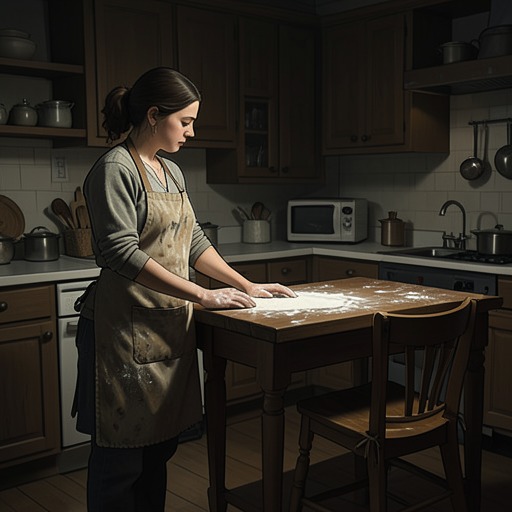
Tita’s life begins in the kitchen, amid onion, herbs, and soup. Before her birth, her sobbing is said to have brought on premature labor; she arrives on the kitchen table already crying, and her tears flood the floor. Afterward, Nacha sweeps up enough salt from the dried tears to fill a ten-pound sack. The episode establishes both the kitchen as Tita’s lifelong home and the story’s recurring connection between emotional force and material consequence. At the end, tears give way to fire, but the kitchen’s legacy still survives in a recipe book.
The pattern of love finding expression through food is established well before the lovers’ final meeting. For Pedro and Rosaura’s wedding, Tita and Nacha multiply a cake recipe tenfold to serve 180 guests. They need 170 eggs, gathered and preserved from the ranch’s best hens. At the wedding, Tita learns that Pedro loves her, even as he marries her sister. The cake then releases a wave of longing and grief among the guests; Tita alone is unaffected, leaving the celebration intent on telling Nacha what she has learned. A later meal of quail in rose-petal sauce carries Tita’s feelings through Gertrudis to Pedro, making food a means of emotional communication between them.
Family celebrations continue to frame their relationship. Tita prepares a mole feast for the baptism of Roberto, Pedro and Rosaura’s son, and feels a tenderness for the child that overrides his place in the marriage that has kept her from Pedro. Years later, the Three Kings’ bread brings her face to face with Mama Elena’s ghost and with wishes she can scarcely imagine voicing: that Esperanza be free to marry, that Gertrudis return, and that the torment cease. These domestic rituals do not resolve the family’s conflicts, but they give the characters recurring occasions to feel and express what household rules have kept constrained.
A Wedding, a Hidden Room, and a Threshold
The event follows the wedding of Esperanza and Alex Brown, which Tita regards as her greatest triumph. Rosaura had fought to preserve the tradition that Esperanza remain with her, and her opposition had made the house a battleground. Tita’s success in seeing Esperanza marry therefore marks a break with the rule that has shaped her own life. The celebration also brings Gertrudis back to the ranch with Juan and their family, placing several generations together at a moment of hard-won change.
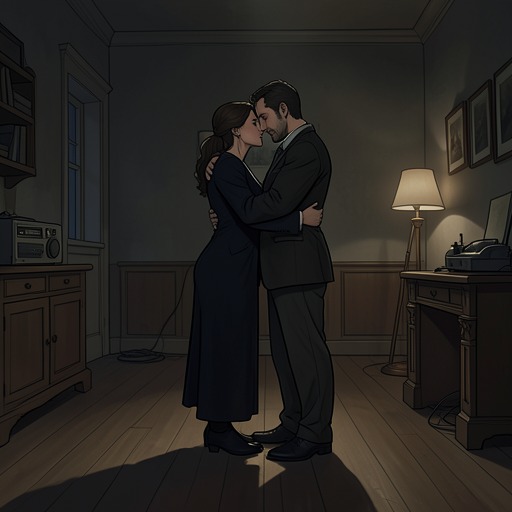
After John Brown leaves, Tita and Pedro are at last able to be together without the precautions that once governed their meetings. They enter the Darkroom, transformed for the occasion: the furniture has been removed, a brass bed stands in the center, and 250 candles illuminate the room. The preparations are mutual, each believing the other arranged them in secret. In a corner, Nacha appears, lights the last candle, gestures for silence, and fades away. Her quiet presence links the lovers’ last meeting to the maternal care that had accompanied Tita from her earliest days in the kitchen.
The encounter brings Tita to a luminous tunnel, a phenomenon she recognizes through John Brown’s earlier explanation of how an intense emotion can illuminate the candles within a person and reveal a way back to a lost divine origin. Tita understands the danger of following that light and initially checks herself: she does not want to die and believes she may experience such intensity again. This hesitation makes the threshold consequential. The tunnel is not merely a vision; it presents a choice between remaining in life and following the light beyond it.
Pedro’s Death and Tita’s Choice
As the lovers lie together, the doves begin to leave the ranch. Their departure precedes the flight of the other animals, including the cows, pigs, chickens, quails, lambs, and horses. Tita does not notice the wider exodus at first. She hears it only after she has steadied her breathing, when the last wings beat and Pedro’s heart pounds against her chest. Then his heartbeat stops. She realizes that he has died, apparently at the instant he entered the luminous tunnel.
Pedro’s death changes the meaning of the light for Tita. She believes the inner fire that had joined them is gone and that, without him, she will be left to wander alone. As the cold begins to paralyze her, she reaches for Tita’s bedspread, woven through years of solitude and insomnia. It is so large that it covers all three hectares of the ranch. She also takes the box of John’s candles and eats them one by one, deliberately recalling her history with Pedro: their first meeting, their first touch, the roses, the kiss, and the caresses and love they shared. The memories are not an escape from the loss; they are the means by which she tries to rekindle the light.
The effort succeeds. As Tita brings each candle into contact with those memories, it begins to burn, her vision brightens, and the tunnel returns. Pedro waits at its entrance. Tita goes to him, and the two embrace and depart together. The book thus gives their separation a final reversal: Pedro’s death first leaves Tita alone, but she uses memory and the candles to reach him again, choosing reunion rather than a life she imagines emptied of feeling.
Fire, Ash, and the Surviving Cookbook
The lovers’ fiery bodies cast sparks onto Tita’s bedspread, which catches fire and sets the entire ranch alight. The Darkroom becomes the center of an eruption that sends stone and ash in every direction. From neighboring towns, people initially mistake the spectacle for fireworks celebrating Esperanza and Alex’s wedding. The fire continues for a week before they come closer. By then, ash several yards deep covers the ranch. The animals’ flight has saved them from the inferno, but the family home has been destroyed.
When Esperanza returns from her wedding trip, the cookbook is the only object she finds beneath the remains. She leaves it to her daughter, the descendant narrator who recounts the story through recipes. The book therefore outlasts both the lovers and the ranch, carrying forward the history of a love interred beneath the ashes. The ashes do not mark simple barrenness: the account says that many forms of life flourish beneath them, making the land the most fertile in the region. Esperanza’s family later builds an apartment building there, and Alex Brown continues to live in one of its apartments.
The frame closes with the descendant narrator preparing Christmas rolls for a birthday celebration and recalling how her mother made them each year. Her tears while cooking recall Tita’s sensitivity to onions and make the inherited recipes a form of continuing presence. The final fire destroys the place where Tita spent most of her life, but it cannot destroy the chain of cooking, memory, and narration through which she remains known.